17++ Completely Inelastic Collision Equation
Completely Inelastic Collision Equation. Ke int ke int size 12{ke rsub { size 8{int} } } {} is mostly converted to thermal energy and sound. It may also be gained during explosions, as there is the addition of chemical or nuclear energy.

Iihs demonstrated the role of size and weight in a series of crash tests in 2019, pairing a midsize suv and small car made by kia and a large car and minicar made by toyota in collisions with each other. If one body (a) with a velocity (a) strikes a second body (b) and sticks to it, then the resulting larger body will have a slower velocity. The paintball pellet has a mass of 0.200 g, and the can has a mass of 15.0 g.the paintball hits the can at a velocity of 90.0 m/s.if the full mass of the paintball sticks to the can and knocks it off the post, what is the final velocity of the combined paintball and can?
coiffure temoin de mariage cheveux court coiffure pour blonde cheveux mi long clin de bardage mr bricolage couleur de mur
PPT Chapter 9 Center of Mass and Linear Momentum
It is represented by e and it depends upon the material of the colliding bodies. Since the velocity of the system's center of mass is unaltered by the collision, the two vehicles. * please enter 0 for completely inelastic collision and 1 for elastic collisions. Thus, the only option is the final state must.
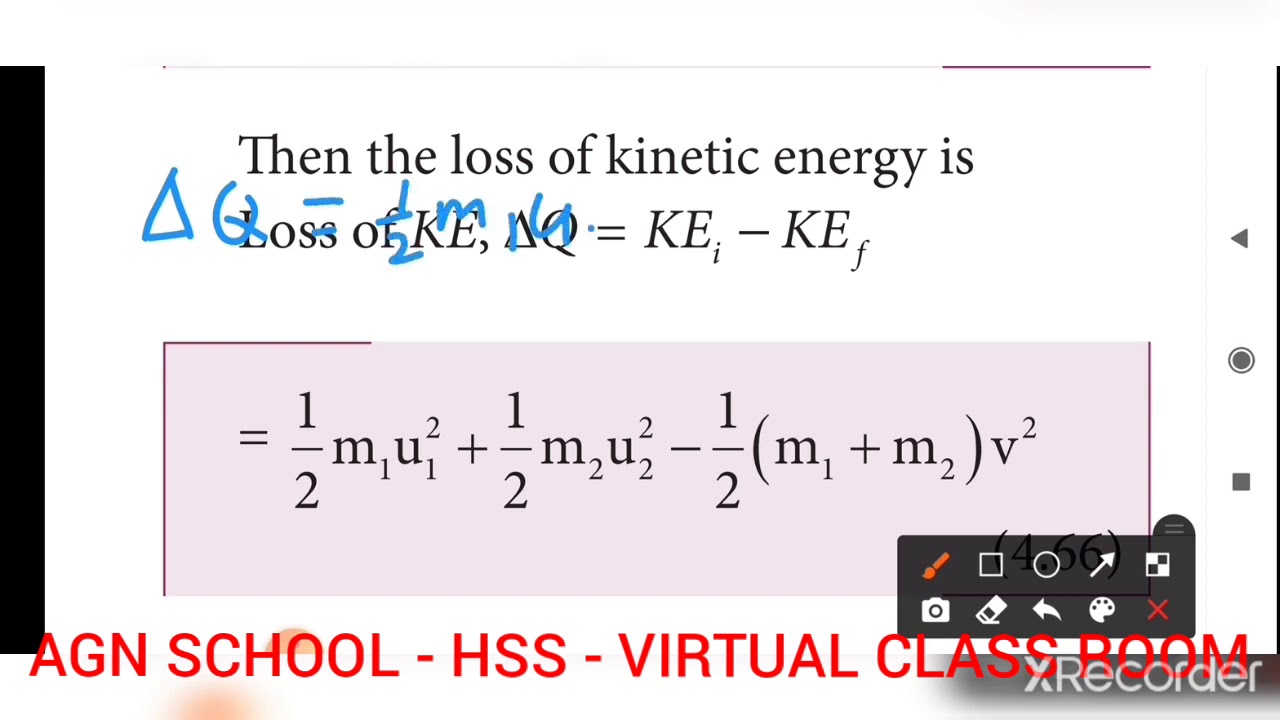
Kinetic energy is not conserved in inelastic collisions. Show how you arrived at this. Fractional energy loss f is one way to quantify the amount of energy “lost”[5] in a collision. This is when the objects that collide are equal in their masses. Mass of object 1 × initial velocity 1 + mass of object 1 × initial velocity 1.

Nearly all of the initial internal kinetic energy is lost in this perfectly inelastic collision. Any objects that collide in this way will reduce the total kinetic energy (and total velocity) by this ratio. Finds mass or velocity after collision. F ˘ ki ¡kf ki (2.8) where ki is the total kinetic energy of the system before the collision and.
The inelastic collision formula is articulated as. It is represented by e and it depends upon the material of the colliding bodies. Here are a number of highest rated inelastic collision physics pictures on internet. During some collisions, the objects do not stick together and less of the internal kinetic energy is removed—such as happens in most automobile accidents. The.

Nearly all of the initial internal kinetic energy is lost in this perfectly inelastic collision. Elastic and inelastic collisions • energy is not conserved in a perfectly inelastic collision. Iihs demonstrated the role of size and weight in a series of crash tests in 2019, pairing a midsize suv and small car made by kia and a large car and.

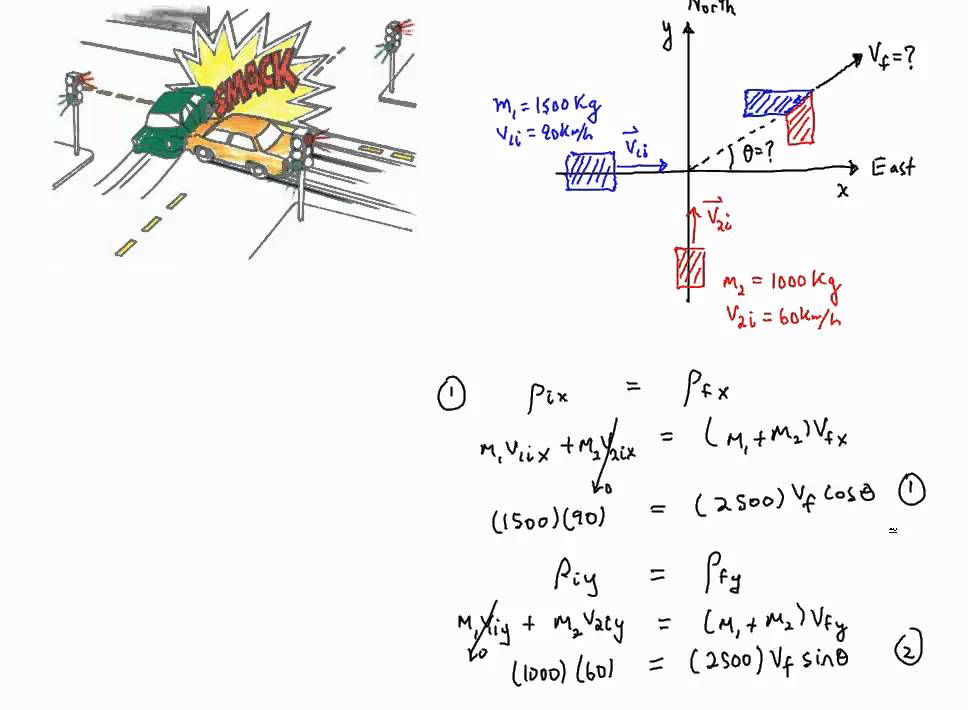
Physical sciences index classical mechanics index: The most general case of a completely inelastic collision is two particles m 1 and m 2 moving at an angle of θ 1 to each other with velocities v 1 and v 2, respectively. Its submitted by executive in the best field. During some collisions, the objects do not stick together and less.

The most general case of a completely inelastic collision is two particles m 1 and m 2 moving at an angle of θ 1 to each other with velocities v 1 and v 2, respectively. Mass of body 2 = m 2 the initial velocity of body 1 = u 1 the initial velocity of body 2 = u 2.

Fractional energy loss f is one way to quantify the amount of energy “lost”[5] in a collision. Nearly all of the initial internal kinetic energy is lost in this perfectly inelastic collision. This is when the objects that collide are equal in their masses. To solve these problems use momentum conservation but not kinetic energy conservation. In a completely inelastic.
• if the objects bounce apart instead of sticking together, the collision is either elastic or partially inelastic. Mass of object 1 × initial velocity 1 + mass of object 1 × initial velocity 1 = (mass of 1 + mass of 2) × final velocity of combined objects) in. Kf / ki = m1 / ( m1 + m2.